Outlets Not Working? Start With the GFCI
If one or more outlets have gone dead and the breaker looks perfectly normal, there is a good chance you can fix this yourself in the next five minutes without paying anybody. Start here before you call us. Stop and call instead if there is a burning smell, a scorch mark, melted plastic, a buzzing or crackling sound, or an outlet that is hot. That is a different problem and a more urgent one. See our page on burning smells and sparking outlets, and call 561-582-2600.

The Four Things to Check, In Order
- Find the GFCI and press reset. This solves more dead outlets than everything else combined, and the reason people miss it is that the GFCI protecting a dead outlet is often in a different room. Look for an outlet with Test and Reset buttons in the bathrooms, the kitchen, the garage, the laundry, outdoors, and anywhere near water. Press Reset firmly until it clicks.
- Flip every wall switch in the room. Many rooms have a half-hot outlet, where one half of a receptacle is controlled by a wall switch so you can put a lamp on it. If somebody switched it off, that outlet is dead and nothing is wrong.
- Look properly at the breaker panel. A tripped breaker does not always look obviously off. It may sit slightly out of line with its neighbors, feel loose, or show a small colored indicator. Push it fully to off, then firmly to on. A breaker left halfway will not restore power.
- Test the outlet with something you know works. Phone chargers fail, and so do the things people test outlets with. Use a lamp you have just seen working somewhere else.
If all four come up empty, read on, because the cause is one of a short list.
Why the GFCI Catches Almost Everyone
This is worth explaining properly because it accounts for so much of the problem.
A GFCI device protects everything wired downstream of it on that circuit. One GFCI outlet in your garage can be protecting outlets in the garage, the exterior walls, and sometimes a bathroom. When it trips, every outlet downstream goes dead, and those downstream outlets are ordinary-looking receptacles with no buttons on them and no clue as to what happened.
So the dead outlet in your bathroom may be controlled by a GFCI in the garage you have not thought about in two years. People hunt for a tripped breaker, find nothing, and conclude the wiring has failed.
Where to look, in rough order of likelihood: bathrooms (check every bathroom, not just the one with the problem), the garage, outdoors, the laundry area, the kitchen counter outlets, and occasionally inside a cabinet or behind an appliance. In some homes the protection is a GFCI breaker in the panel instead, which looks like an ordinary breaker with a small Test button on it.
Press Reset firmly. A GFCI that clicks and holds has solved your problem. A GFCI that will not reset, or resets and trips straight back, is telling you there is a genuine fault on the circuit, and that is worth a call rather than repeated attempts.

Why My Lights Work but the Outlets Do Not
Because they are usually on different circuits. In most homes lighting and receptacles are wired separately, so losing every outlet in a room while the ceiling light stays on is completely normal behavior for an electrical system, not a sign of something strange.
It also tells you something useful: the problem is confined to one receptacle circuit, which narrows the search considerably. That circuit either has a tripped GFCI on it, a tripped breaker, or a break in the chain somewhere.
When It Is Not the GFCI or the Breaker
Here are the actual causes we find, in the order we find them.
A loose connection in a daisy-chained circuit
This is the big one. Outlets on a circuit are usually wired in a chain, each one feeding the next. If the connection fails at any point in that chain, everything downstream of it goes dead while everything upstream works fine. That is why people find three outlets dead and four working, with no pattern that makes sense from inside the room.
The failure is usually at a terminal that was never fully tightened, or at a back-stabbed connection. Back-stabbing means the wire was pushed into a small hole in the back of the device rather than wrapped around the screw terminal. It is faster to install and it is a known failure point, because the internal contact relaxes over years of heating and cooling until it stops making a reliable connection.
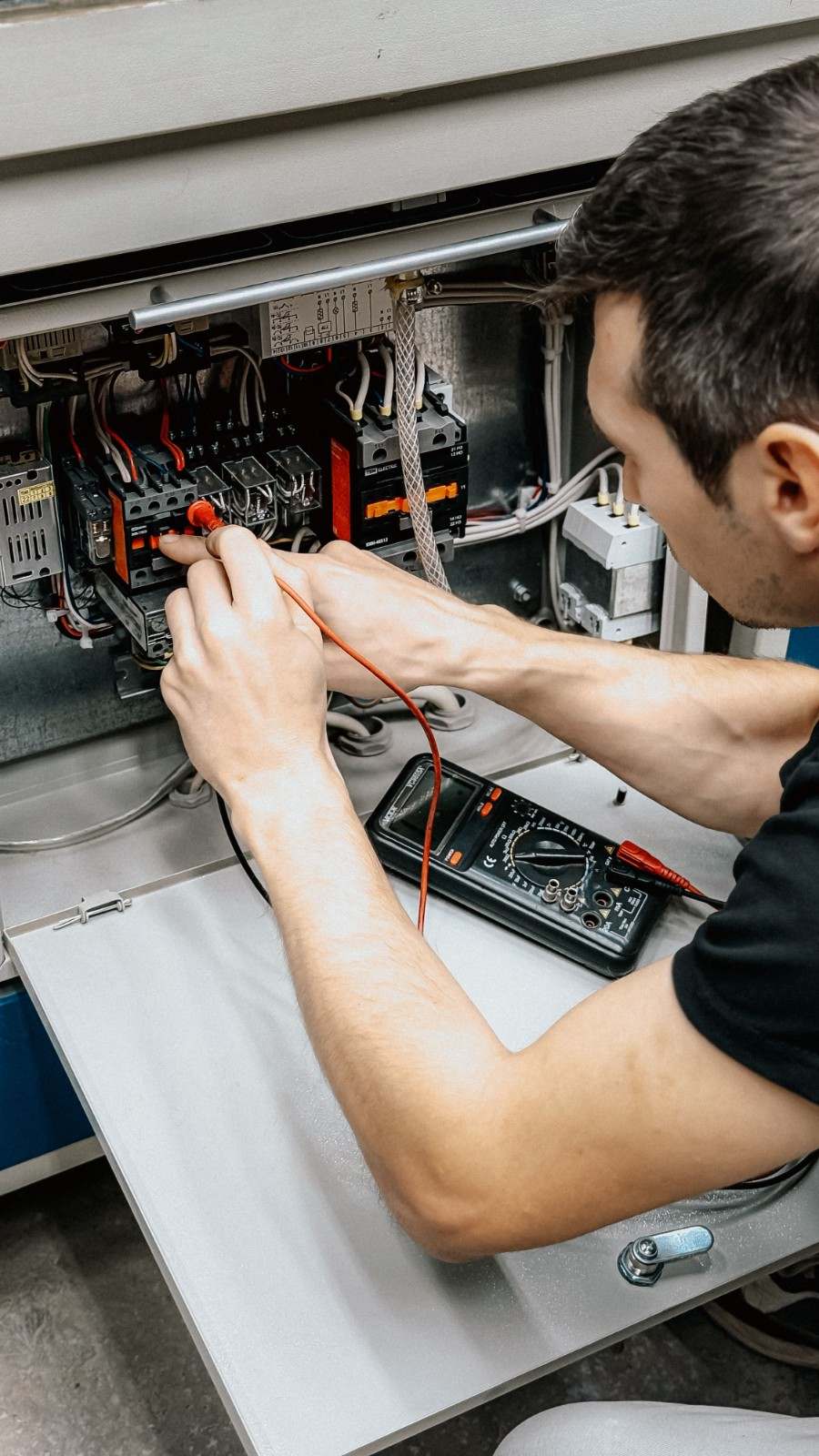
Finding which outlet in the chain has failed is the actual work. It is not difficult for somebody with a tester who knows how circuits are typically run, and it is extremely frustrating without one.
A worn-out receptacle
Receptacles wear. The internal contacts that grip the plug blades weaken, and eventually they stop making contact at all. If plugs fall out of an outlet under their own weight, that outlet is worn out and should be replaced whether or not it has failed yet.
An open neutral
A break in the neutral conductor rather than the hot one. This produces stranger symptoms than a simple dead outlet: lights that brighten and dim as other things switch on, outlets that work intermittently, or equipment behaving oddly. An open neutral can damage electronics and it should be looked at promptly rather than lived with.
A failed or mis-wired GFCI
GFCI devices do not last forever. Older ones fail, sometimes by refusing to reset and sometimes by quietly ceasing to protect, which is worse. They should be tested periodically using the Test button, and replaced when they no longer trip and reset correctly.
Pests, moisture and corrosion
In this climate, water finds its way into outdoor boxes and ants nest inside them. Corroded terminations in a damp exterior box are a very ordinary cause of a dead outdoor circuit here, and one that no national article on this subject mentions.

Dead Outlets Room by Room
Kitchen
Kitchen counter receptacles are GFCI-protected, and there is often more than one GFCI serving different sections of counter. They are also the outlets most likely to be tripped by an appliance fault, because that is where the appliances are. Check every GFCI in the kitchen, including any behind a toaster or inside a cabinet.
Bathroom
Almost always the GFCI, and in many homes several bathrooms are protected by one device in a single bathroom. If one bathroom has a GFCI and the other does not, start with the one that does.
Garage
Garage receptacles are GFCI-protected and the garage GFCI frequently protects outdoor outlets too. A garage freezer plugged into one of these is worth knowing about, because a trip you do not notice becomes a defrosted freezer.
Outdoors
Outdoor receptacles trip on moisture, and here they trip often: driving rain, humidity, a failed cover gasket, or a decorative lighting cord that has been sitting in a puddle. If an outdoor outlet trips repeatedly, the cause is usually water getting somewhere it should not, and the fix is the enclosure or the device rather than endless resets.
A whole room
Usually a break in the chain, a tripped GFCI upstream, or a breaker. If one room is entirely dead and the lights work, you are looking for the receptacle circuit for that room.
Two-Prong Outlets
A related problem in older West Palm Beach homes. If your outlets have two slots and no round ground hole, the wiring behind them has no equipment ground, which means no protective path for fault current and no grounding for surge protectors or sensitive electronics.
You cannot fix this by fitting a three-prong receptacle onto ungrounded wiring. That creates an outlet that looks protected and is not, which is more dangerous than the honest two-prong version. The real remedies are running a ground, replacing the circuit, or installing GFCI protection with the correct labeling where that is permitted as an interim measure. We will tell you which applies to your house.

What Outlet Repair Costs
|
Job |
Typical range* |
|
Replace a standard receptacle |
$150 to $300 |
|
Replace a GFCI receptacle |
$180 to $350 |
|
Diagnostic visit to trace a dead circuit |
$125 to $250 |
|
Repair a loose or failed connection found in the chain |
$175 to $400 |
|
Several outlets replaced on the same visit |
Lower per outlet, quoted together |
|
Add a new outlet where none exists |
$250 to $600+ |
|
Repair an open neutral |
Quoted after diagnosis |
|
Ungrounded (two-prong) circuit remediation |
Quoted after inspection |
*Planning estimates. Replacing an outlet is quick. What takes the time is locating which connection in a daisy-chained circuit has failed, particularly where the circuit runs through rooms nobody expected.
If several outlets need attention, doing them on one visit costs considerably less per outlet than calling about them one at a time, and in a house of a certain age it is usually worth checking the rest while somebody is there.
Why West Palm Beach Calls Nassif Electric
- Fifty years in South Florida, since 1976.
- Florida statewide licensed unlimited electrical contractor, License EC13001410.
- Licensed, insured and bonded.
- We locate the failed connection rather than replacing outlets until one works.
- We will tell you on the phone if it sounds like a GFCI reset, which costs you nothing.
- Honest about two-prong outlets and what can and cannot safely be done about them.
- Same day and after-hours response when it is warranted.

Areas We Serve
We repair outlets and dead circuits throughout West Palm Beach, including downtown, Northwood, El Cid, Flamingo Park, SoSo and the neighborhoods along Okeechobee Boulevard, and across South Florida from Juno Beach to Fort Lauderdale: Palm Beach, Palm Beach Gardens, North Palm Beach, Jupiter, Riviera Beach, Lake Worth Beach, Greenacres, Wellington, Royal Palm Beach, Boynton Beach, Delray Beach and Boca Raton.
Call 561-582-2600 for outlet repair in West Palm Beach.
Frequently Asked Questions
-
Can an outlet stop working without the breaker tripping?
Yes, and it is the most common version of this problem. The usual cause is a tripped GFCI somewhere else on the circuit, often in a different room. The other frequent cause is a loose or failed connection at one outlet, which kills every outlet downstream of it while the breaker stays happily on, because nothing has drawn excessive current.
-
Why are my outlets not working but the lights are on?
Because lights and receptacles are usually on separate circuits in most homes. That is normal wiring, not a fault. It also narrows the problem down helpfully: whatever is wrong is on the receptacle circuit for that area, so look for a GFCI, a breaker, or a break in the chain.
-
How do I find the GFCI that controls my dead outlet?
Look for an outlet with Test and Reset buttons, and check beyond the room with the problem. Bathrooms first, including other bathrooms, then the garage, outdoors, the laundry area and the kitchen counters. It can also be hidden inside a cabinet or behind an appliance. In some homes the protection is a GFCI breaker in the panel instead, which looks ordinary but has a small Test button.
-
My GFCI will not reset. What does that mean?
Either there is a genuine fault on the circuit, something plugged in downstream is leaking current, or the GFCI itself has failed. Unplug everything on that circuit and try again. If it resets with nothing plugged in, reintroduce items one at a time to find the culprit. If it still will not hold, stop and call, because repeatedly pressing it does not help and the device is telling you something.
-
Why would only some outlets stop working?
Because outlets are wired in a chain, with each one feeding the next. When a connection fails partway along, everything after it goes dead and everything before it keeps working. That is why people find three dead outlets and four live ones with no pattern that makes sense looking around the room. The failure point is often a back-stabbed connection, where the wire was pushed into the back of the device instead of wrapped around the screw.
-
How do I know if an outlet is blown?
If the breaker is on, no GFCI is tripped, and a known-good lamp does not work in it while working elsewhere, the outlet or the connection feeding it has failed. Visible signs that confirm it: plugs falling out under their own weight, a loose or wobbly device, discoloration, or any scorching. Scorching or a smell changes this from a repair into an urgent call.
-
How much does it cost to replace an outlet?
A standard receptacle generally runs $150 to $300 replaced, a GFCI receptacle $180 to $350. A diagnostic visit to trace a dead circuit runs $125 to $250, and repairing a failed connection found in the chain usually lands between $175 and $400. Doing several at once costs much less per outlet than separate visits.
-
Can I replace an outlet myself?
People do, and on a modern circuit with the breaker off and a tester to confirm it is dead, it is within reach for a careful person. The parts that go wrong are not the swap: it is not confirming the circuit is actually dead, not knowing whether the device is feeding others downstream, wiring a GFCI's line and load terminals backwards, or working on ungrounded or aluminum wiring that needs specific methods. If the outlet is dead because of a fault rather than a worn device, replacing it changes nothing.
-
My outdoor outlet keeps tripping. Why?
Water, nearly always. Driving rain, humidity, a failed or missing cover gasket, or an extension cord connection sitting in a puddle. Outdoor outlets are GFCI-protected precisely because water and electricity around people is the hazard they exist to prevent. If it trips repeatedly, the fix is finding where the moisture is getting in rather than resetting it again, and here it is also worth checking for insects nesting inside the box.
-
Our garage freezer stopped working and we did not notice. Is that common?
Unfortunately, yes. Garage receptacles are GFCI-protected, and a trip nobody sees means a freezer that quietly defrosts. If you keep a freezer or a fridge in the garage, it is worth knowing which GFCI protects that outlet and checking it occasionally, and worth asking about options when an electrician is next out.
-
My outlet is loose and plugs fall out. Is that dangerous?
It is worth fixing. A loose grip means poor contact, poor contact means arcing each time the plug moves, and arcing generates heat. It is one of the common ways a worn outlet becomes a burnt outlet. Replacing a worn receptacle is a small job and a sensible one.
-
What is an open neutral?
A break in the neutral conductor rather than the hot. It produces stranger symptoms than a dead outlet: lights that brighten and dim as other things switch on and off, intermittent outlets, or electronics misbehaving. It can damage equipment and it should be diagnosed promptly rather than tolerated.
-
My house has two-prong outlets. Can you just fit three-prong ones?
Not simply, no. Fitting a three-prong receptacle onto wiring with no equipment ground produces an outlet that looks protected and is not, which is worse than the two-prong one it replaced. The legitimate options are running a ground, replacing the circuit, or installing GFCI protection with the correct labeling where that is permitted. We will look at what you have and tell you which applies.
-
Several outlets have failed over the past year. Should I be worried?
It is worth investigating rather than treating as coincidence. Repeated failures across a house usually point to something systemic: wiring of an age where connections are relaxing, back-stabbed devices throughout, aluminum branch circuits, or a panel and circuits carrying more than they were designed for. A whole-home device check is inexpensive next to replacing them one emergency at a time.
Still Dead?
If you have reset every GFCI you can find, checked the breakers and the wall switches, and the outlet is still dead, the problem is a connection you cannot see. That is a short job for somebody with a tester and a sense of how the circuit was run.
Call 561-582-2600 for outlet and dead circuit repair in West Palm Beach.