Power Distribution & Switchgear in West Palm Beach, FL
Distribution equipment is the part of a building nobody thinks about until the morning it fails, and then it is the only thing anyone can think about. A main breaker that will not reset or a section of switchgear that has been quietly corroding behind a louver takes a whole facility down, and the lead time on replacement gear is measured in months rather than days. Nassif Electric has installed, replaced and maintained electrical distribution equipment in South Florida since 1976. We are a Florida statewide licensed unlimited electrical contractor, License EC13001410, licensed for the full scope of commercial and industrial electrical work, and licensed, insured and bonded. Call 561-582-2600 to discuss distribution equipment, a planned replacement or a maintenance program.

What We Work On
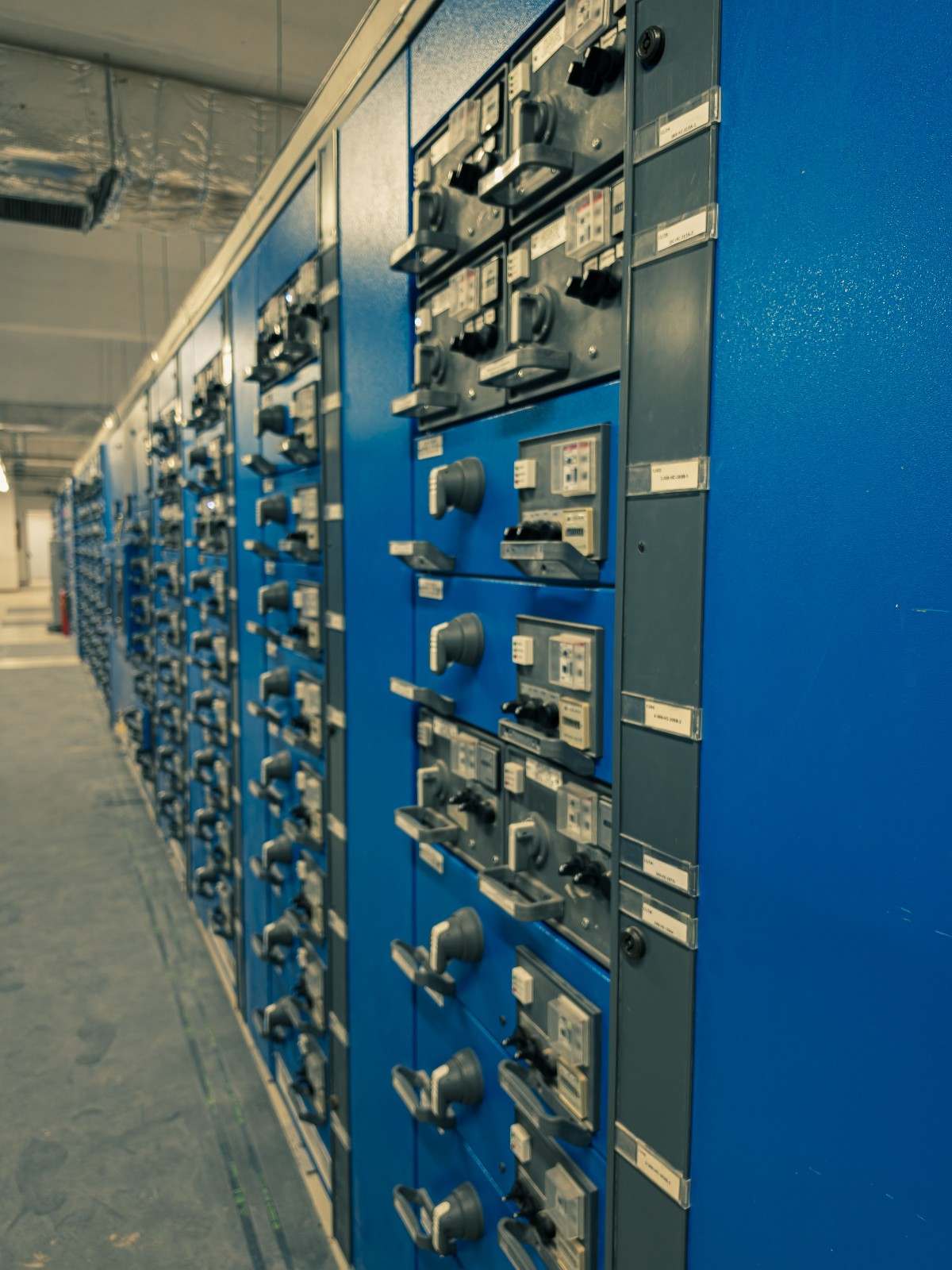
Switchgear and switchboards
Installation, replacement and modification of main switchgear and switchboards, including main breakers, feeder sections, metering sections and ground fault protection. Most of our work in this category is replacing gear that has reached the end of its service life, is no longer supported by the manufacturer, or no longer has the capacity the building needs.
Panelboards and distribution panels
Distribution and branch panelboards, sub-panels, feeders and the circuit work beneath them. Also the unglamorous and genuinely useful work of mapping and labeling a panel nobody has been able to read for fifteen years, so the next person who opens it does not have to guess.
Transformers
Dry-type and pad-mounted transformers, step-down transformers for equipment loads, replacements and relocations, and the pads, grounding and clearances they require. Transformer loading and placement are worth getting right at the start, because a transformer in a hot enclosed space in this climate will not deliver what the nameplate says for long.
Motor control centers and motor circuits
MCC installation and modification, buckets, starters and overloads, VFD circuits, and the motor branch circuits for compressors, chillers, pumps, conveyors and production equipment.
Busway and feeders
Busway runs and plug-in units, feeder installation and replacement, conduit and cable systems between service equipment and distribution.
Service equipment and metering
Main service equipment, CT cabinets, metering sections and the coordination with FPL that anything touching their side of the meter requires. FPL coordination is usually the long pole on these projects, which is why we start it early.
Generator interconnection
Distribution-side work for standby systems, automatic transfer switches, emergency and optional standby distribution, and the separation of essential from non-essential loads. The generator pages cover the units themselves.
Arc Flash Studies & Electrical Safety Compliance
The part of this subject with the most consequence and the least attention.
An arc flash study, usually done as part of a power system study, models what would happen at each piece of equipment if a fault occurred. It produces the incident energy at each point, the boundary distances, and the personal protective equipment required to work on that equipment safely. The output is the labeling you see on properly maintained gear and the information a worker needs before opening a panel.
Why facilities have them done: current safety standards for electrical work in the workplace require that the hazard be assessed and that equipment be labeled, employers are responsible for the safety of anyone working on energized equipment, and insurers and corporate safety programs increasingly ask for it directly. A study also stops being accurate the moment the system changes, so a facility that has added a transformer, replaced gear or increased its service needs the study revisited.
A short study with a power system model also tells you things worth knowing for other reasons: whether your protective devices are actually coordinated so a fault trips the nearest breaker rather than the main, and whether your equipment is rated for the available fault current, which is a question many older buildings have never had answered.
We work with licensed engineers on the analysis, carry out the field data collection, and handle the labeling and any corrective work the study identifies.
Testing & Preventive Maintenance
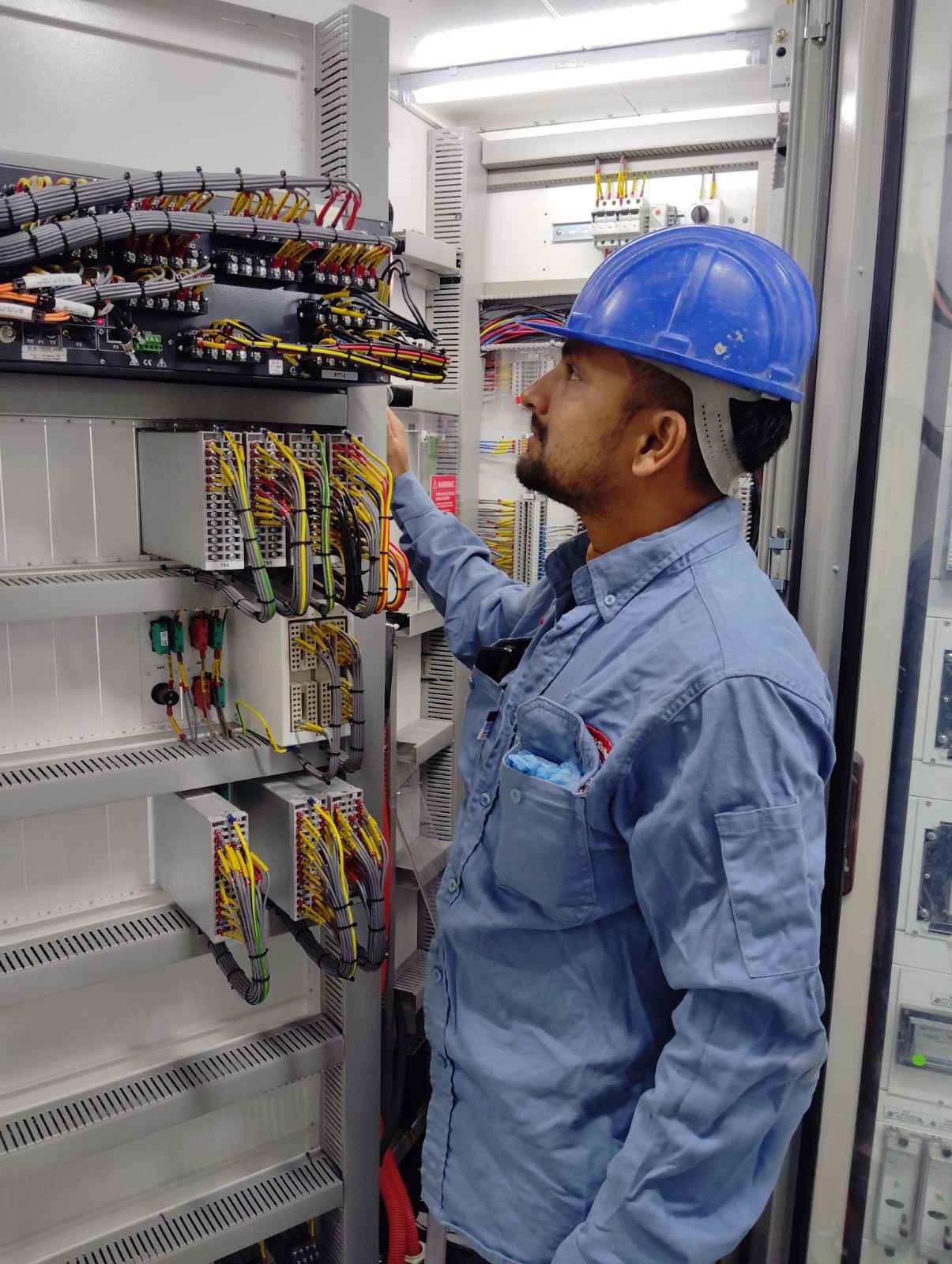
Distribution equipment fails slowly and then suddenly. Most of what takes a facility down announces itself months in advance to anybody looking for it.
- Infrared thermography, which finds loose and deteriorating connections by their heat signature while the equipment is still running.
- Insulation resistance and contact resistance testing on breakers, bus and cable.
- Breaker exercise, inspection and cleaning, because a breaker that has not moved in twelve years may not move when it has to.
- Torque verification on bus and terminations, which is where a surprising share of failures begins.
- Cleaning and inspection of enclosures, gaskets, louvers, heaters and ventilation.
- Transformer inspection, including temperature, ventilation and clearances.
- Documentation and trending, so this year’s readings can be compared with last year’s rather than read in isolation.
On a scheduled program this is planned work in a planned window. On an unscheduled basis it is an emergency during business hours with whatever gear can be sourced that week.

What South Florida Does to Distribution Equipment
Gear here ages differently than it does in a dry climate, and the reasons are worth understanding before deciding a thirty-year-old switchboard is fine because it still works.
Salt air corrodes. Within a few miles of the ocean or the Intracoastal, enclosures, bus and terminations corrode faster than the same equipment inland, and the damage is inside where nobody sees it. Outdoor and rooftop gear is worst affected, and equipment near a cooling tower or a loading dock gets its own version of the problem.
Humidity and heat. Enclosures in unconditioned spaces condense, and gear that runs hot in an unventilated room derates and ages faster than it should. Space heaters in outdoor enclosures exist for this reason and are frequently found switched off or failed.
Storm and flood exposure. Equipment rooms at or below grade and gear mounted low on exterior walls are exposed to surge and flooding. Submerged electrical equipment should not simply be dried out and re-energized, whatever its condition appears to be, and gear that has been under water generally needs replacing rather than cleaning.
Lightning and transients. Palm Beach County gets a great deal of lightning, which is an argument for surge protection at the service and at distribution panels serving sensitive equipment.
Replacing Gear: Planning the Shutdown
The question clients ask first is not what it costs. It is how long the facility will be without power, and the honest answer is that the outage length is a design decision made months earlier.
What determines it: whether the replacement can be staged in sections with temporary feeds, whether a temporary generator or roll-up service can carry critical loads, whether the work can happen over a weekend or a holiday, whether FPL has to be involved and what their scheduling looks like, and the equipment lead time, which on switchgear has been long enough in recent years to be the governing item on the schedule.
We plan these backwards from the date the facility can be down. That means ordering gear early, sequencing demolition and installation so the outage window holds, and having a contingency for the parts of the job that cannot be verified until the old equipment is opened. Clients who come to us a year before a planned replacement get a much better outcome than clients who come to us the week the main breaker failed.
Why Facility Managers Here Use Nassif Electric
- Fifty years of commercial and industrial electrical work in South Florida, since 1976.
- Florida statewide licensed unlimited electrical contractor, License EC13001410.
- Licensed, insured and bonded, with documentation ready for property managers and general contractors.
- Planned shutdowns worked at night, on weekends and over holidays.
- Equipment procurement and lead time managed as part of the project rather than left to the client.
- FPL coordination handled on anything touching service equipment.
- 24/7 response when distribution equipment fails outside a planned window.

Areas We Serve
We work on distribution equipment throughout West Palm Beach, including downtown, the Okeechobee Boulevard corridor and the industrial areas along Australian Avenue, and across South Florida from Juno Beach to Fort Lauderdale: Palm Beach, Palm Beach Gardens, North Palm Beach, Jupiter, Riviera Beach, Lake Worth Beach, Greenacres, Wellington, Royal Palm Beach, Boynton Beach, Delray Beach and Boca Raton.
Frequently Asked Questions
-
What is switchgear, and what is it for?
Switchgear is the assembly of circuit breakers, switches, fuses and protective devices that controls, protects and isolates a building's electrical power. It takes incoming power from the utility or a transformer and distributes it to the panels and equipment beyond, while protecting the system by opening automatically when something faults. It is also what allows a section of the system to be isolated safely so somebody can work on it.
-
Is switchgear the same as a circuit breaker?
No. A circuit breaker is one component inside switchgear. Switchgear is the whole assembly: the enclosure, the bus that carries the power, the main and feeder breakers, the protective relays and metering, and the controls. A breaker protects a circuit; switchgear organizes and protects the system.
-
What is the difference between switchgear, a switchboard and a panelboard?
They sit in order of size and capability. Switchgear is the heaviest duty, typically with drawout breakers, higher interrupting ratings and relay protection, used at the service entrance or main distribution on larger facilities. A switchboard sits beneath it in capability and is common on mid-size commercial buildings. A panelboard is the distribution or branch panel that feeds circuits within a space. Which one a facility needs is a function of the load and the available fault current, not preference.
-
What are the main types of switchgear?
The usual division is by voltage: low voltage, medium voltage and high voltage. Within that, gear is also described by construction, such as metal-enclosed or metal-clad, and by the interrupting medium, with vacuum and air the common ones in commercial and industrial settings today. Which applies to your facility depends on your service, and we can tell you by looking at the gear.
-
How much does switchgear cost?
Too variable to publish a figure that would mean anything. The price is driven by voltage class, amperage, the number of sections, whether the existing equipment can be partly reused, how the shutdown has to be sequenced, and current equipment lead times. What we can do is look at the installation and give you a quote broken out by scope, which is a more useful number than any range on a website.
-
How long will my facility be without power during a switchgear replacement?
The outage length is decided by planning rather than by the work itself. Some replacements can be staged in sections with temporary feeds so the facility never goes fully dark; some can be done over a weekend or a holiday; some need a temporary generator to carry critical loads. The variables are whether the work can be sectionalized, whether FPL is involved, and the equipment lead time. We plan backwards from the date you can be down.
-
What is an arc flash study and do we need one?
It models what would happen at each piece of equipment if a fault occurred, and produces the incident energy, the boundary distances and the protective equipment required to work on it safely. Current workplace electrical safety standards require the hazard to be assessed and equipment to be labeled, and insurers and corporate safety programs ask for it with increasing frequency. If your facility has never had one, or has changed its electrical system since the last one, it is worth raising. We handle the field work and the corrective work and work with licensed engineers on the analysis.
-
How often should distribution equipment be inspected?
Annually is the common interval for infrared scanning and visual inspection, with a more thorough inspection and testing at longer intervals depending on the criticality of the facility and the age and condition of the equipment. Facilities near salt water, with equipment in unconditioned spaces, or with gear past twenty-five years should be looked at more often rather than less.
-
Our gear is from the 1980s and still works. Should we replace it?
Still working is not the same as still reliable, and the questions worth asking are whether replacement parts and breakers are still available, whether the equipment is rated for the fault current now available at your service, whether it has enough capacity for what the building does today, and what condition the bus and terminations are actually in. We can assess it and tell you whether you are looking at a maintenance program or a replacement, and if it is replacement, planning it beats waiting for it.
-
Our equipment was flooded in a storm. Can it be cleaned and reused?
Electrical distribution equipment that has been submerged should not be dried out and re-energized. Water and the contaminants in it damage insulation, bus and components in ways that are not visible and that cause failures later. Industry guidance is that submerged equipment generally needs replacement, and some components may be reconditioned only by the manufacturer. We assess what was affected and work with you and your insurer on what has to be replaced.
-
Do you handle transformers and motor control centers?
Yes. Dry-type and pad-mounted transformers including replacements, relocations and the pads, grounding and clearances they need, and MCC installation and modification including buckets, starters, overloads and VFD circuits.
Talk to Us About Your Distribution Equipment
A failing main, a replacement you know is coming, an arc flash study you have been asked for, or a maintenance program for gear nobody has opened in years. We will look at what is installed and tell you plainly what condition it is in.
Call 561-582-2600 or email [email protected]. 24/7 response for commercial clients.
