
Whole-Home Rewiring in West Palm Beach
Rewiring a house is the electrical job nobody plans for. It usually arrives attached to something else: an insurance company asking questions at renewal, a four-point inspection before a sale, a kitchen remodel where the electrician opens a wall and stops, or a breaker that has started tripping for no reason anyone can find. Nassif Electric rewires homes in West Palm Beach and across Palm Beach County, in full and in part. This page covers how to tell whether your house needs it, what is actually behind the walls in homes built here, what the work involves, and what it costs. For device-level work and new circuits, see our wiring installation services.


Signs a house may need rewiring
No single one of these means a rewire. Several together usually means an inspection is worth paying for.
- Two-prong outlets through most of the house, which means ungrounded circuits
- A fuse panel, or a panel that has run out of room and is full of tandem breakers
- Breakers that keep tripping under loads the house used to carry without complaint
- Wall plates or outlets that feel warm, or plugs that fall out of their receptacles
- Lights that dim noticeably when the air handler or a pump starts
- Any burning smell near an outlet or a panel, which is a stop-everything-and-call situation rather than a planning one
- An insurer asking about wiring type at renewal, or a four-point inspection that flagged the electrical section
What is actually in Palm Beach County walls
Rewiring quotes vary enormously between houses, and the single biggest reason is what is already in there. Four things turn up locally.
Aluminum branch wiring, roughly 1965 to 1973
This is the one that matters most here. Florida built an enormous number of houses in exactly that window, and a lot of them went up with aluminum conductors on the branch circuits because copper prices were high. Aluminum expands and contracts more than copper as it heats and cools, and it oxidizes at the connection. Over decades that works the connection loose, and a loose connection under load is where overheating starts. The problem lives at the terminations, at outlets, switches and splices, rather than in the middle of a cable run.
The Consumer Product Safety Commission has studied this wiring, and the accepted remedies are connection repair methods specifically approved for joining aluminum to copper, or replacing the branch circuits outright. Pigtailing with ordinary twist-on wire connectors is not one of the approved methods, and it is what we most often find when someone has already tried to address it.
Which route makes sense depends on how much aluminum is present, its condition, and what your insurer will accept. We will give you a straight answer on both options rather than steering you to the bigger job.
Cloth and rubber insulated wiring, 1950s and 1960s
The conductors are usually copper and often still sound. The insulation is the problem. Rubber and cloth go brittle with age and heat, and they crack off the conductor when the wire is flexed, which is exactly what happens when someone changes a fixture or pulls a device out of a box. A house can run on this wiring for years and then develop three faults in a month because someone redecorated.
Ungrounded two-wire circuits
The most common finding of all in older local homes. The wiring may be in good condition; what is missing is the equipment grounding conductor. Without it, there is no fault path, no protection for anything plugged in, and no legitimate way to fit a three-prong receptacle. The options are running grounds or fitting GFCI protection with the required labeling, which is covered on our page about grounded outlets.
Knob-and-tube
Installed before about 1950, ungrounded, with insulation that is now seventy-five years old. It is a serious finding and most insurers will not write a policy on it. It is also rare in Palm Beach County, because very little of the local housing stock predates it. If you have it, you almost certainly already know.

Full rewire or partial rewire
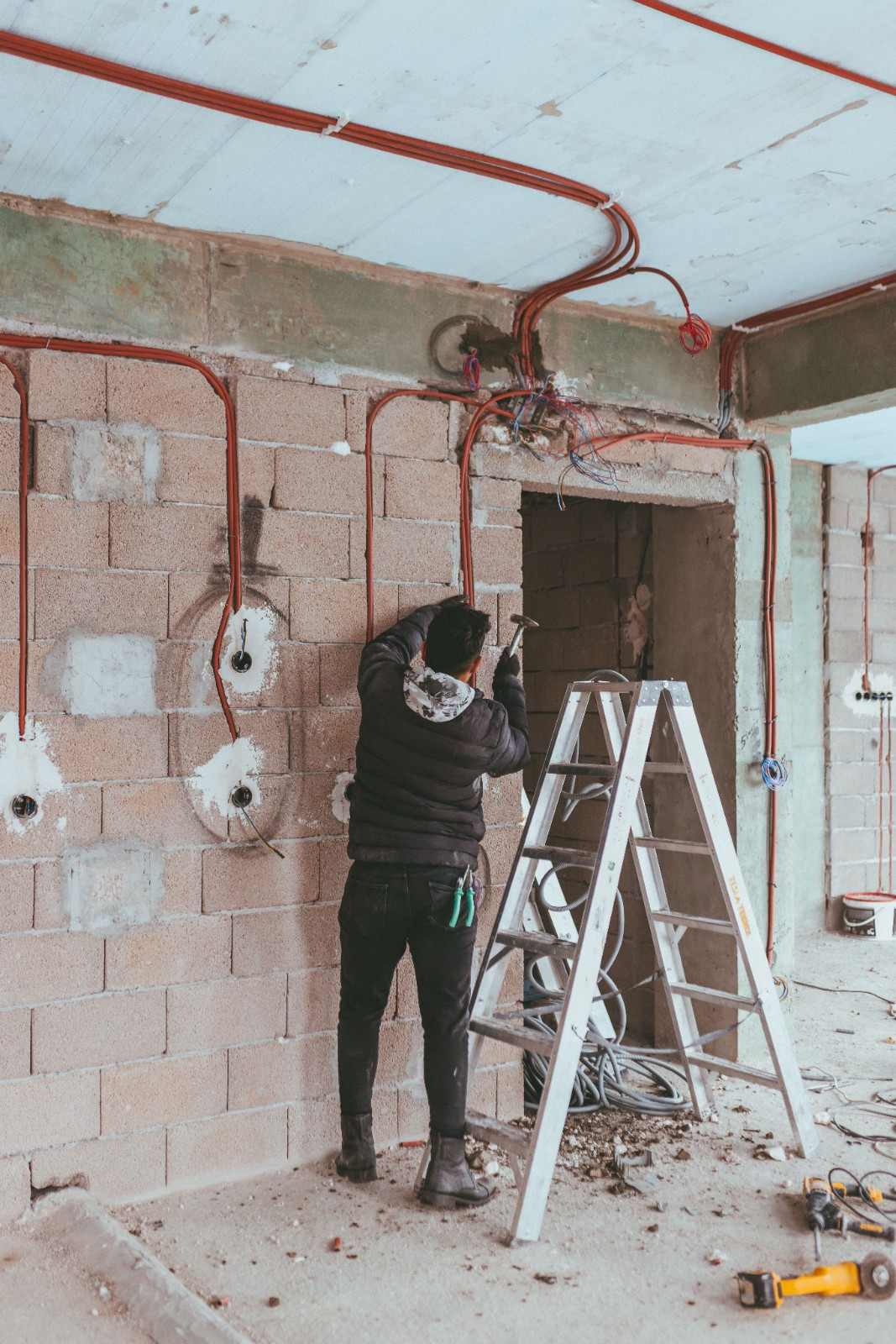
A full rewire replaces the branch circuits throughout the house, usually with a new panel, new boxes and new devices. It is the right answer when the wiring is failing generally, when an insurer requires it, or when the house is already opened up for a renovation.
A partial rewire replaces specific circuits or a specific area. It is the right answer more often than homeowners expect, because electrical problems tend to cluster by era. A house that was added onto in 1990 may have fifteen-year-old wiring in half of it and 1968 aluminum in the rest, and only the aluminum half needs work. Ask for the partial option in writing even if you end up choosing the full job, because the comparison tells you a lot about the contractor.
Most full rewires include a panel upgrade, since the original panel was sized for a house with a fraction of today’s load.
What the work involves
Rewiring happens in phases, and most of them are noisier and dustier than homeowners expect.
- Inspection and plan. We map the existing circuits, identify the wiring types present, calculate the load for the house as you actually use it, and price full and partial options.
- Permit. Pulled before work starts.
- Rough-in. New cable is run from the panel to each location. This is the disruptive phase: access holes in drywall, work in the attic, and sections of the house without power during working hours.
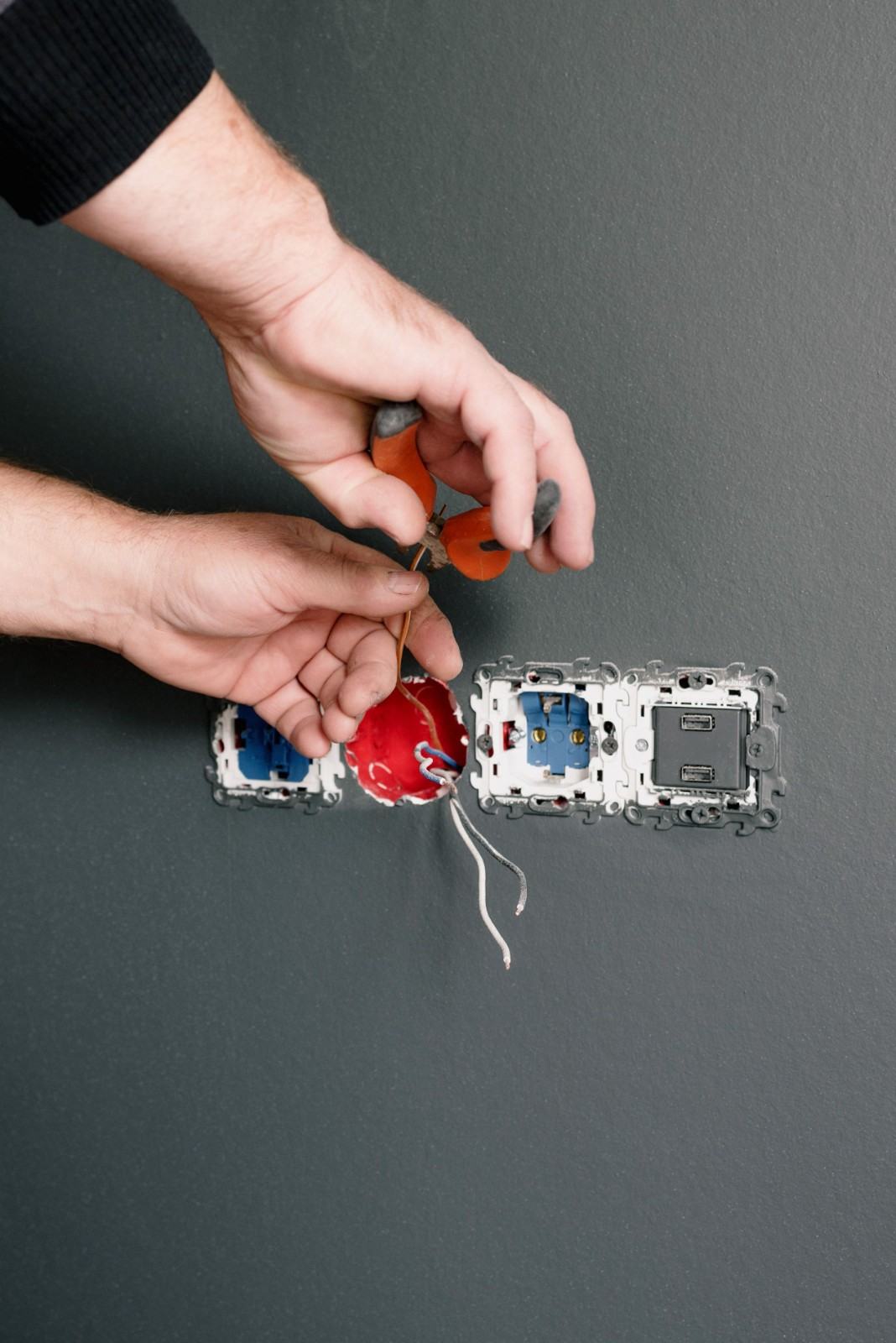
- Panel and devices. The new panel goes in, circuits are landed and labeled, and new boxes, outlets and switches are fitted.
- Inspection. The county or city inspector signs off.
- Patching and finish. Drywall repair and paint happen after the inspection passes, not before, because an inspector may need to see something again.
Most homeowners stay in the house. We work in sections so the kitchen and at least one bathroom keep power, and we tell you at the start of each day which part of the house will be down. A whole-house rewire on an occupied home generally runs one to three weeks depending on size and access, and attic access in a single-story block house usually makes it faster than the same job in a two-story.
What rewiring costs in Palm Beach County
The ranges below are for residential work in this county. Square footage matters less than access and wiring type: a 2,000 square foot single-story with a walkable attic can cost less to rewire than a 1,400 square foot two-story with no access.
Scope | Typical range | What moves the number |
|---|---|---|
Electrical inspection and written assessment | $250 to $600 | Size of house, number of circuits traced |
Partial rewire, one area or era | $2,500 to $7,500 | Number of circuits, access, drywall involved |
Aluminum connection remediation, approved method | $75 to $200 per connection | Number of devices, accessibility |
Whole-house rewire, single story | $9,000 to $20,000 | Square footage, attic access, device count |
Whole-house rewire, two story | $14,000 to $28,000 | Access between floors, wall construction |
Panel upgrade as part of a rewire | $2,200 to $4,500 | Service size, meter and utility coordination |
Drywall repair and paint | Varies | Usually a separate trade; confirm who is carrying it |
Permits and inspections
Rewiring requires a permit in Palm Beach County and in the City of West Palm Beach, and an inspection before walls are closed. This is worth more than the compliance box it ticks. Unpermitted electrical work surfaces during a sale, it complicates claims, and it leaves the next owner with your problem. A rewire without a permit is not a cheaper rewire; it is an undocumented one.

Rewiring, insurance and selling a house in Florida
For most Palm Beach County homeowners, this is where the rewiring question starts.
Many Florida insurers require a four-point inspection on older homes, covering roof, electrical, plumbing and HVAC. The age threshold and the underwriting rules differ by carrier and they change, so your agent is the authority on your policy. What is consistent is that the electrical section asks about wiring type and panel type, and that aluminum branch wiring and certain obsolete panel brands are recurring reasons a policy gets declined, surcharged or non-renewed.
If an inspection has flagged your wiring, the useful next step is finding out what your carrier will accept. Some accept approved connection remediation on aluminum; others want the branch circuits replaced. That answer determines the scope of the job, which is why we ask what your insurer said before quoting rather than after. We cannot promise an insurance outcome, and anyone who does is guessing on your behalf.
If you are selling, documented and permitted electrical work is an asset at the negotiating table. If you are buying an older home and the inspection report mentions aluminum wiring, get a quote before closing rather than after.
Why West Palm Beach homeowners call Nassif Electric
- Licensed and insured electrical contractor working throughout Palm Beach County
- Familiar with the wiring that is actually in local houses, including the 1965 to 1973 aluminum that defines a lot of this market
- Partial and full rewire options quoted side by side, so you can see what the extra money buys
- Permits pulled and inspections coordinated
- Phased work on occupied homes, with the day’s affected areas told to you in advance
- Straight answers about what your insurer is likely to want, without promises we cannot keep

Areas We Serve
West Palm Beach, Palm Beach, Palm Beach Gardens, North Palm Beach, Riviera Beach, Lake Worth Beach, Greenacres, Royal Palm Beach, Wellington, Jupiter, Juno Beach, Lake Park, Boynton Beach, Delray Beach and surrounding Palm Beach County communities.
Frequently Asked Questions
-
How much does it cost to rewire a house in West Palm Beach?
A whole-house rewire here generally runs into five figures, and the spread is wide because access matters more than square footage. A single-story block house with a walkable attic is cheaper to rewire than a smaller two-story with no path between floors. A partial rewire of one area costs a fraction of the full job. Get both quoted so you can see the difference.
-
How do I know if my house has aluminum wiring?
Houses built in Palm Beach County between about 1965 and 1973 are the ones to check. The conductors are silver colored rather than copper colored, and the cable sheathing is sometimes marked AL or ALUMINUM. Looking inside an energized panel or box is not a homeowner job. An electrician can confirm it in one visit, and so can a four-point inspection.
-
Does aluminum wiring have to be replaced completely?
Not always. The problem is at the connections rather than along the cable runs, and there are repair methods specifically approved for joining aluminum to copper that address those connections. Replacing the branch circuits is the other route. Which one is right depends on the condition of the wiring, how much of it there is, and what your insurance carrier will accept. We will price both.
-
Will my insurance company make me rewire?
Carriers vary and the rules change, so your agent is the only reliable source for your policy. What we see regularly is that aluminum branch wiring and certain obsolete panel types come up in four-point inspections and can lead to a declination, a surcharge or a non-renewal. Some carriers accept approved connection remediation; some want the circuits replaced. Find out what yours will accept before deciding the scope of work.
-
Can I live in the house while it is being rewired?
Usually yes. We work in sections so the kitchen and at least one bathroom keep power, and we tell you each morning which areas will be down that day. It is dusty and noisy and there will be access holes in the drywall for a while, so plan around that rather than around having to move out.
-
How long does a whole-house rewire take?
Generally one to three weeks for the electrical work on an occupied home, depending on size and access. Drywall repair and painting follow the inspection and add time on top of that. Partial rewires are often a few days.
-
Do I need a permit to rewire my house?
Yes. Rewiring requires a permit in Palm Beach County and in the City of West Palm Beach, plus an inspection before the walls are closed. We pull the permit and coordinate the inspections. Unpermitted work on this scale causes problems at sale and at claim time.
-
Can you rewire just part of the house?
Often, and it is worth asking about. Electrical problems cluster by era, so a house that was added onto later may only need the older portion done. We quote partial and full options side by side.
-
Does rewiring include a new panel?
Most full rewires do, because the original panel was sized for a house with far less load than a modern one carries. Whether yours needs replacing depends on its age, its condition, its capacity and whether the brand is one that is still supported.
-
Will rewiring damage my walls?
There will be access holes, and in block construction more of the work goes through the attic and soffits than through the walls. We keep openings as small and as few as the job allows and we tell you where they will be before we start, not after. Patching and painting happen after the electrical inspection passes.
Think your house may need rewiring?
Call Nassif Electric for an electrical assessment. We will tell you what is actually in your walls, quote partial and full options side by side, and give you something you can take to your insurer.
