
Whole-House Surge Protector Installation in West Palm Beach
Florida gets more lightning than any other state, and the stretch of coast from Palm Beach County down is in the busiest part of it. The strike does not have to hit your house to cost you money. A hit to a utility line a few streets away sends a voltage spike down the service conductors and into everything in the house that is plugged in. Most people find out about this the expensive way, usually in July, usually all at once: the air handler control board, the garage door opener, the router and the television, none of which were connected to anything but the wall. Nassif Electric installs whole-house surge protective devices at the panel for homes across West Palm Beach and Palm Beach County. This page explains what the device does, what it does not do, and what the installation involves. For wiring work generally, see our wiring installation services.
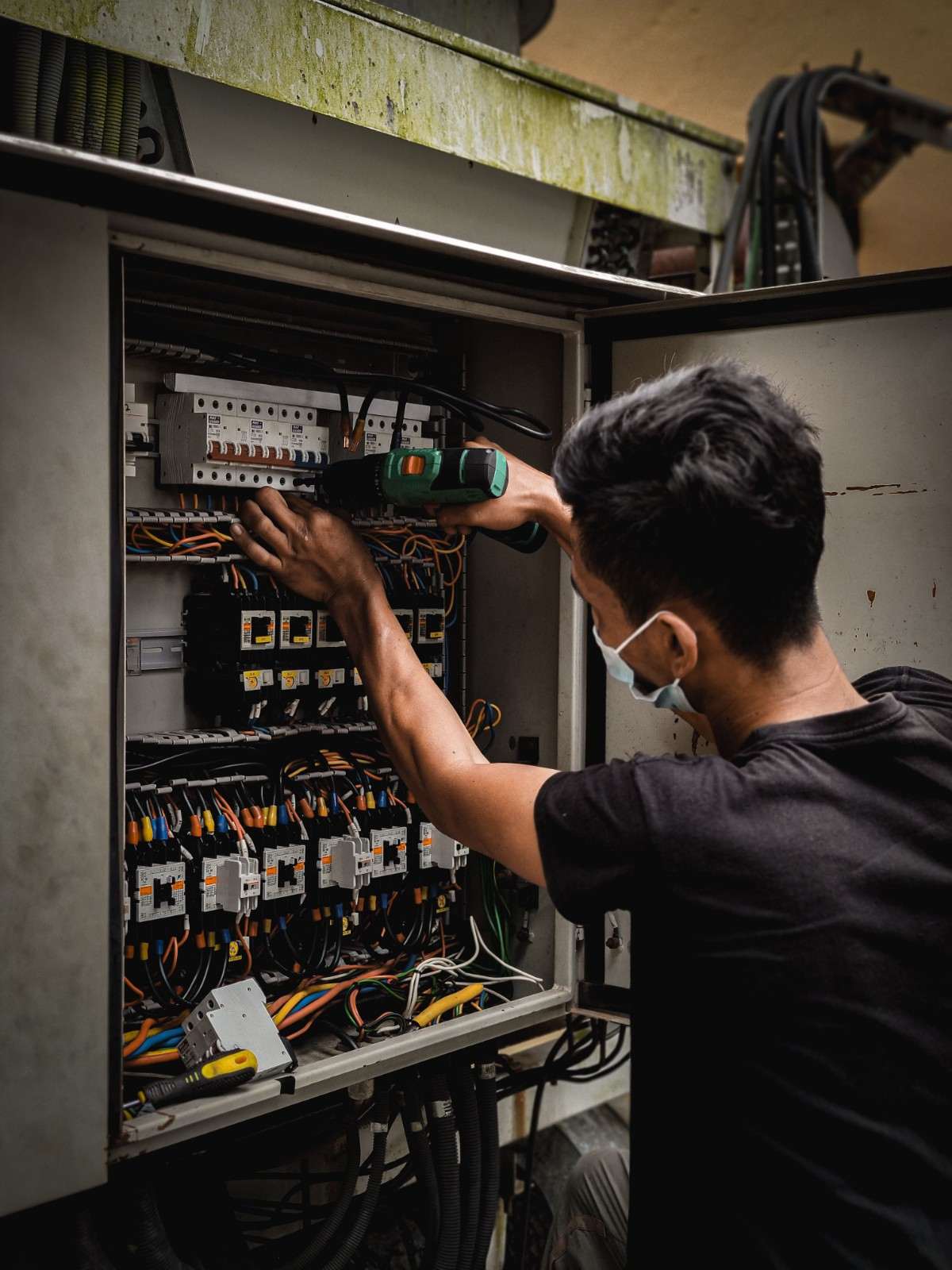
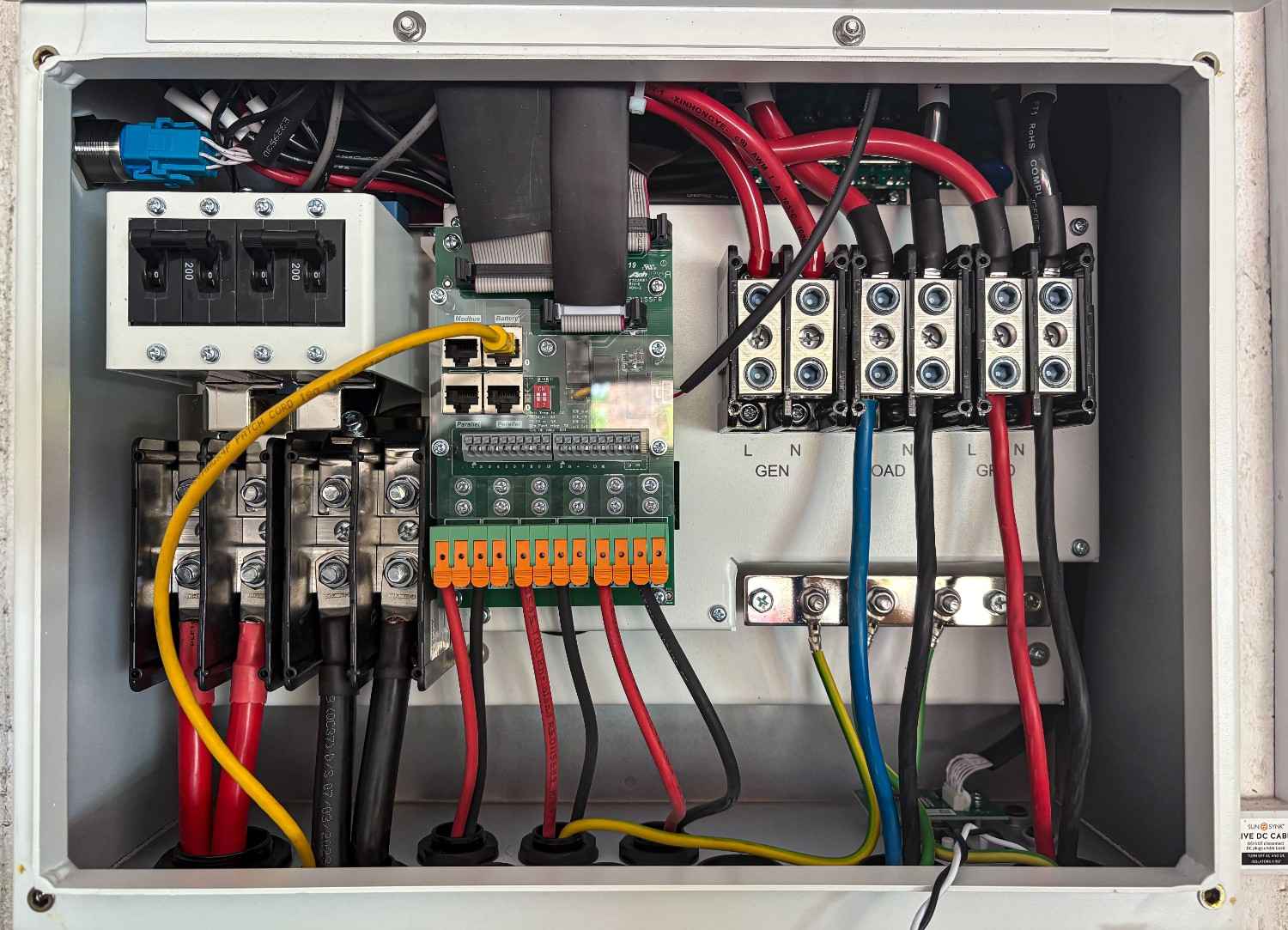
What a whole-house surge protector does
A surge protective device, or SPD, mounts at or beside your electrical panel and watches the incoming voltage. When voltage climbs above a safe threshold, the device diverts the excess to ground in a few billionths of a second, clamping what reaches your branch circuits down to a level your equipment can survive.
It protects everything downstream of the panel at once: the air handler, the pool pump, the well pump, the oven, the washer and dryer, every appliance with a circuit board in it, and every outlet in the house. That is the difference between it and the plug strip behind the television, which protects only what is plugged into the strip.
Where surges actually come from
Lightning is the dramatic one and it is a real risk here, but it is not the common one. Most surges that damage equipment are smaller, more frequent and generated inside the house, when a motor with a heavy inrush cycles on and off: the air conditioning compressor, the pool pump, the refrigerator, the well pump. Each event is small. The damage is cumulative, and it shows up as electronics that fail earlier than they should.
The external sources matter too, and in this county they have a seasonal pattern. Lightning strikes to utility infrastructure, utility switching, and the moment power is restored after an outage all produce spikes. The restoration spike catches people out: the surge frequently arrives not during the storm but when the lights come back on.


Types of device, and what each layer covers
Type 1
Installed on the line side of the main breaker, between the meter and the panel. Type 1 devices are built to handle the larger externally generated events, including lightning-related surges arriving on the service conductors. Line-side work involves conductors that cannot be de-energized at your panel, so it is a utility coordination job as well as an electrical one.
Type 2
Installed on the load side of the main breaker, either as a breaker-style device in a panel slot or mounted next to the panel and fed by a dedicated two-pole breaker. This is the most common residential installation and it protects the whole house downstream of the panel.
Point-of-use, the second layer
A panel-mounted device reduces a surge to a survivable level; it does not eliminate it. Sensitive and expensive equipment benefits from a second layer at the equipment itself. That is what a good quality plug strip or a dedicated point-of-use protection at the outlet is for. The two layers work together, and neither replaces the other.
What a panel device does not cover
A surge can enter the house on any conductor that comes in from outside, not just the power service. Coaxial cable, telephone lines and buried data lines all carry surges past a panel-mounted SPD. If those lines come into your house, they need protection where they enter. A panel device also cannot stop a direct lightning strike to the structure itself; that is a lightning protection system, which is a different trade.
Why this matters more in Palm Beach County
Three things stack here. The lightning density is the highest in the country. Hurricane season brings repeated outages and restorations, and the restoration spike is a surge event every time. And South Florida houses run heavy motor loads almost year round, because the air conditioning rarely stops and a lot of properties have pool equipment, so the internal surge activity never gets a quiet season.
That combination is why a device that is a sensible precaution in most of the country is closer to standard equipment here.

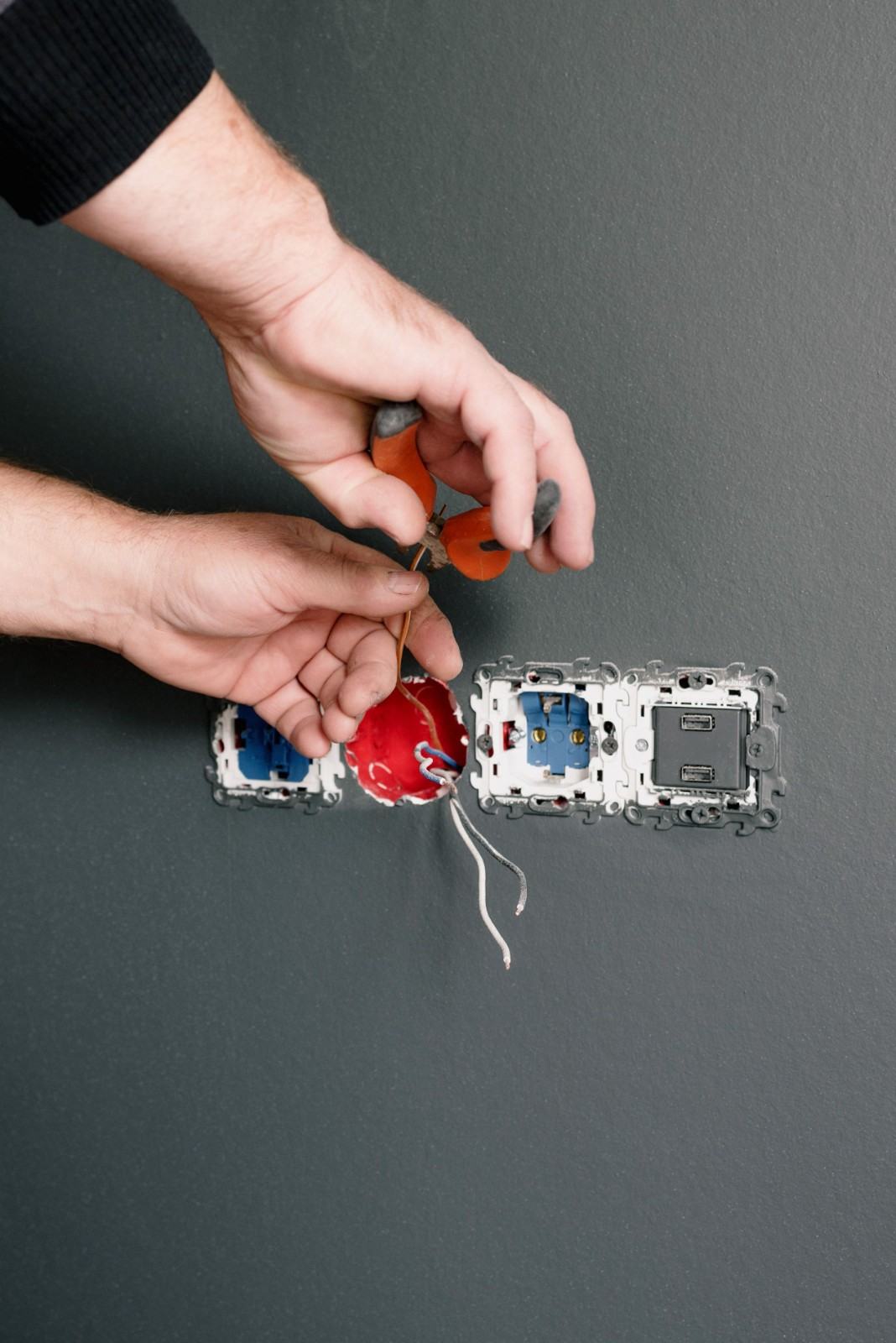
What the installation involves
The work itself is short. The preparation is where the judgment sits.
- Panel assessment. We check for available breaker space, confirm the panel accepts a compatible device, and look at the condition of the bus and the main. Some older panels have no room, some use a breaker type that is no longer made, and some should not take anything new at all. Where that is the case, the honest answer is a panel upgrade first.
- Grounding and bonding check. An SPD diverts energy to ground, so it is only as good as the grounding electrode system behind it. A device fitted to a house with a corroded or incomplete ground is decoration. In a coastal county this gets checked, not assumed.
- Device selection. Sized to the service, listed for the application, and chosen for where it sits relative to the main.
- Installation. The device is mounted as close to the panel as physically possible and the conductors are kept short and straight. Lead length matters more than most homeowners would guess, because every extra inch of wire adds voltage that gets through during a surge event. A device installed on long looping leads underperforms a cheaper one installed tightly.
- Testing and labeling. The indicator lights are checked, the circuit is labeled, and we show you what the lights mean before we leave.
Most installations take one to two hours. Power is off for part of it.
Why this one is not a DIY job
There are plenty of videos showing this installation taking fifteen minutes, and the ones showing a Type 2 breaker going into an empty slot are not wrong about the mechanics. What they leave out is that the panel interior stays energized at the main lugs whether or not the main breaker is off. You cannot kill that from inside the house. There is no safe way for a homeowner to work around it, and a mistake there is not a shock, it is an arc flash.
A Type 1 device makes this plainer, since it lands on conductors ahead of the main and the utility has to be involved. If you have read the install instructions and they mention line-side connection, that is the sentence that means call someone.
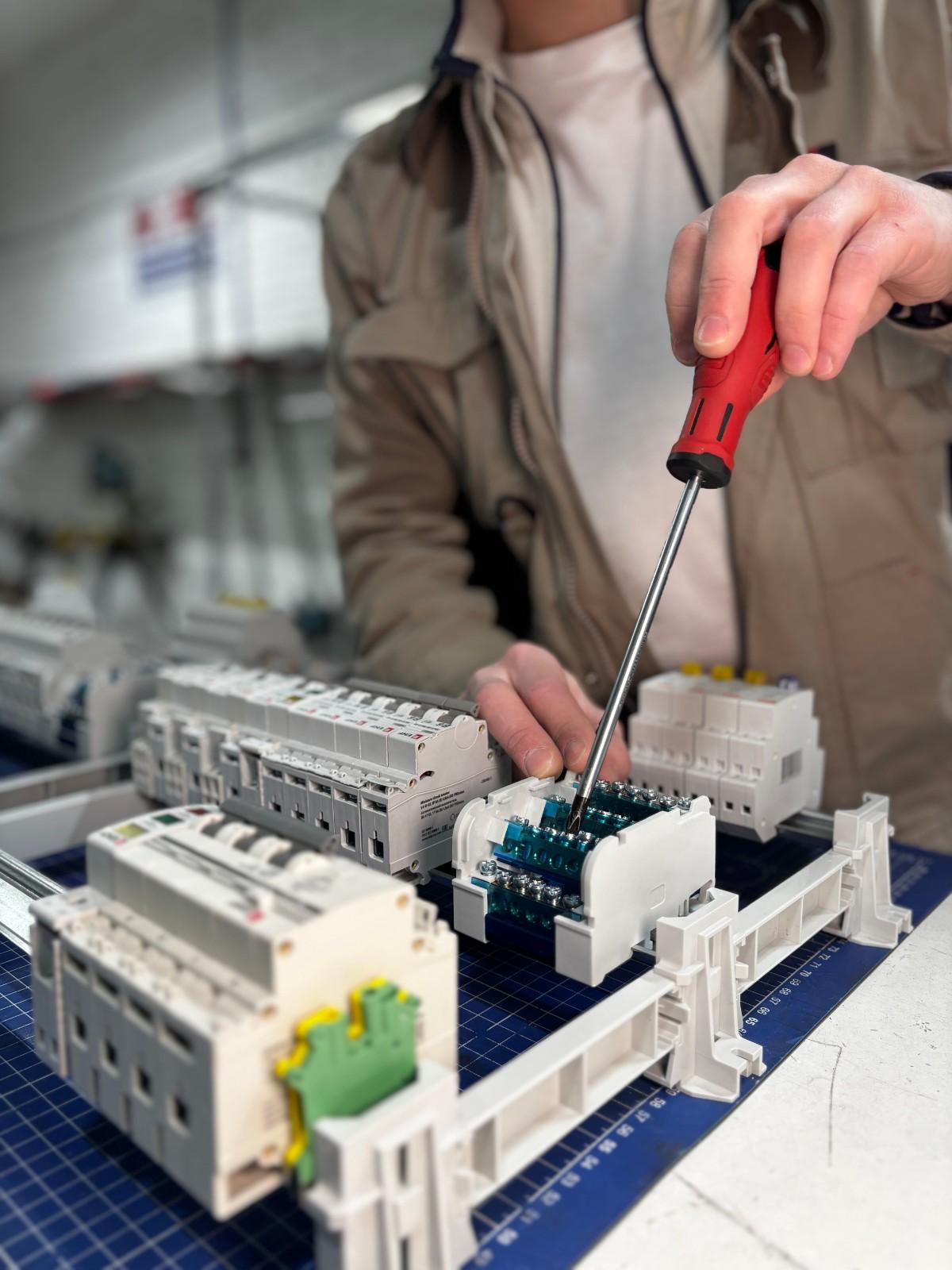

Code requirements
Recent editions of the National Electrical Code require a surge protective device on dwelling unit services for new installations and for service replacements. Florida adopts the NEC through the Florida Building Code, so the requirement follows whichever edition is currently in force for your jurisdiction. In practice this means a new home or a service replacement in Palm Beach County will include one.
This does not mean an existing house without one is in violation. Codes apply at the time of installation. If your service is being replaced or upgraded, expect the device to be part of the scope, and ask for it to be itemized so you can see what it costs on its own.
When to replace an existing device
Surge protective devices wear out, which surprises people who assumed theirs was still working because it was still there. The components inside absorb energy and degrade, both from one large event and from thousands of small ones. That is why the device has indicator lights.
Check yours after any significant storm or outage, and check it once at the start of storm season. If the indicator shows a failed or partially failed state, the device has done its job and has nothing left. A dead SPD offers no protection and gives no warning other than the light nobody looks at.

What surge protection costs in West Palm Beach
Work | Typical range | What changes the price |
|---|---|---|
Type 2 SPD, breaker style, existing panel space | $450 to $850 | Device rating, panel make, breaker availability |
Type 2 SPD, externally mounted beside panel | $550 to $1,100 | Mounting location, conduit run, lead length |
Type 1 SPD, line side | $750 to $1,500 | Utility coordination, meter configuration |
Replacing a failed SPD | $350 to $700 | Whether the existing mounting and breaker are reusable |
Coax and data line protection | $150 to $400 | Number of lines, entry point access |
Grounding electrode system repair, if needed | $400 to $1,400 | Condition of existing electrode, soil, access |

Permits
Adding a surge protective device to an existing panel usually requires a permit in Palm Beach County and in the City of West Palm Beach, because it involves work inside the service equipment. We pull it and coordinate the inspection.
Why West Palm Beach homeowners call Nassif Electric
- Licensed and insured electrical contractor working throughout Palm Beach County
- Grounding checked before the device goes in, because an SPD is only as good as the ground behind it
- Devices mounted with short leads, which is the installation detail that decides how well one actually performs
- Honest assessment when a panel has no room or should not take a new device at all
- Installation ahead of storm season rather than during it

Areas We Serve
West Palm Beach, Palm Beach, Palm Beach Gardens, North Palm Beach, Riviera Beach, Lake Worth Beach, Greenacres, Royal Palm Beach, Wellington, Jupiter, Juno Beach, Lake Park, Boynton Beach, Delray Beach and surrounding Palm Beach County communities.
Frequently Asked Questions
-
Is a whole-house surge protector worth it in Florida?
Florida has the highest lightning density in the country and Palm Beach County sits in the busiest part of it. Add hurricane season outages, where the surge often arrives at the moment power is restored, and heavy year-round air conditioning and pool motor loads generating internal surges. The replacement cost of one air handler control board is usually in the same range as the device and its installation.
-
What does a whole-house surge protector actually protect?
Everything downstream of your panel: the air handler, pool and well pumps, major appliances, anything with a circuit board, and every outlet in the house. It does not protect against surges arriving on coaxial, telephone or buried data lines, and it does not stop a direct lightning strike to the structure. Those need separate measures.
-
Do I still need power strips if I have one at the panel?
Yes, for expensive and sensitive equipment. The panel device reduces a surge to a survivable level rather than removing it entirely. A second layer at the equipment catches what gets through and handles surges generated inside the house downstream of the panel. The two layers are designed to work together.
-
What is the difference between Type 1 and Type 2?
Type 1 installs on the line side of your main breaker, between the meter and the panel, and handles larger externally generated events. Type 2 installs on the load side, inside or beside the panel, and is the most common residential installation. Which suits your house depends on your service configuration and panel.
-
Can you install one on my panel?
Most modern panels take one. Some older panels have no spare breaker space, use a breaker type that is no longer manufactured, or have a bus in a condition where nothing new should be added. We check the panel before quoting and tell you honestly if a panel upgrade needs to come first.
-
How long do surge protectors last?
There is no fixed lifespan. The components absorb energy and degrade, either from a single large event or from thousands of small ones. That is what the indicator lights are for. Check yours after any significant storm or outage, and once at the start of storm season. If the indicator shows a failed state, the device is spent and needs replacing.
-
Does my house have to have one by code?
Recent editions of the National Electrical Code require one on dwelling unit services for new installations and service replacements, and Florida adopts the NEC through the Florida Building Code. That applies when the work is done, so an existing home without one is not in violation. If your service is being replaced or upgraded, expect it in the scope.
-
Can I install one myself?
The mechanical part looks simple in the videos, and that is the problem. The panel interior stays energized at the main lugs whether the main breaker is on or off, and there is no way to de-energize that from inside the house. A mistake there is an arc flash rather than a shock. A Type 1 device is further out of reach again, because it connects ahead of the main and the utility has to be involved.
-
Will it stop a direct lightning strike?
No, and anyone who says otherwise is overselling. A direct strike to the structure is what a lightning protection system is designed for, and that is a different trade. What the SPD handles is the far more common case: a strike or fault somewhere on the utility network that sends a spike down the service conductors to your house.
-
When is the best time to have one installed?
Before storm season. Having the work done in spring means it is in place for the months when it matters, and scheduling in May is considerably easier than scheduling during a week when half the county has just lost power.
Want surge protection in before storm season?
Call Nassif Electric. We will check your panel and your grounding, quote the right device for your service, and install it with the short leads that make it work as designed.
